

Recipes
Iced Latte Recipe
An Iced Latte That Keeps Its Coffee Flavor
Start with a measured coffee base, cold milk and enough ice. Then adjust the balance one small change at a time.
Jump to recipe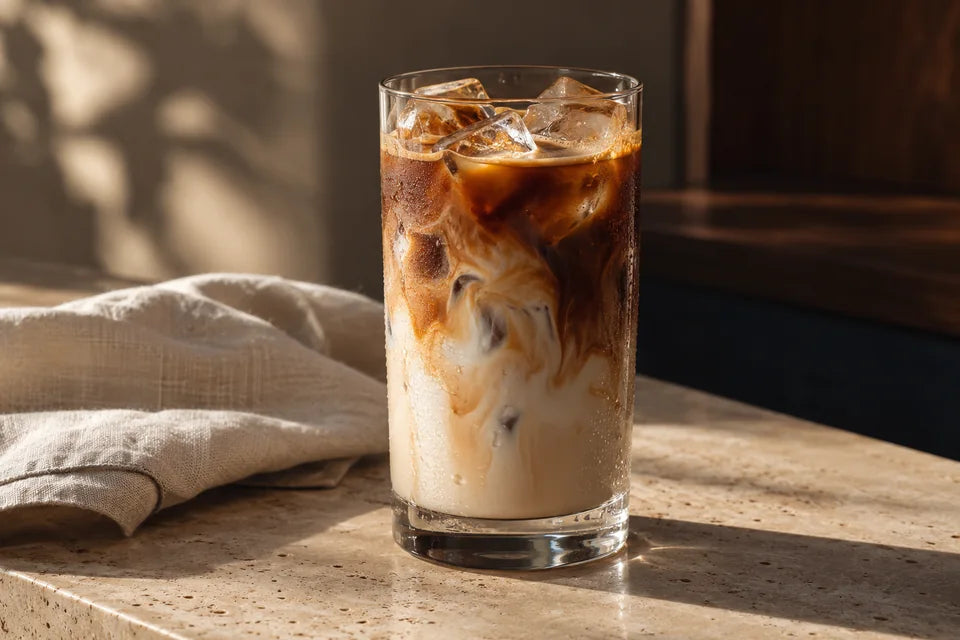 AI-created editorial imagery
In this guide 5 chapters
A small base makes the glass easier to balance
An iced latte is concentrated coffee with cold milk and ice. The practical trick is to choose the amounts before filling the glass. A little melting is part of the drink; you are allowing for it, not trying to make it disappear.
For a first glass, use espresso or prepared moka coffee and a milk you already enjoy. A large mug of hot drip coffee needs a different balance and will melt more ice. That can still make nice iced coffee, but it will not behave like the smaller base below.
One glass, measured once
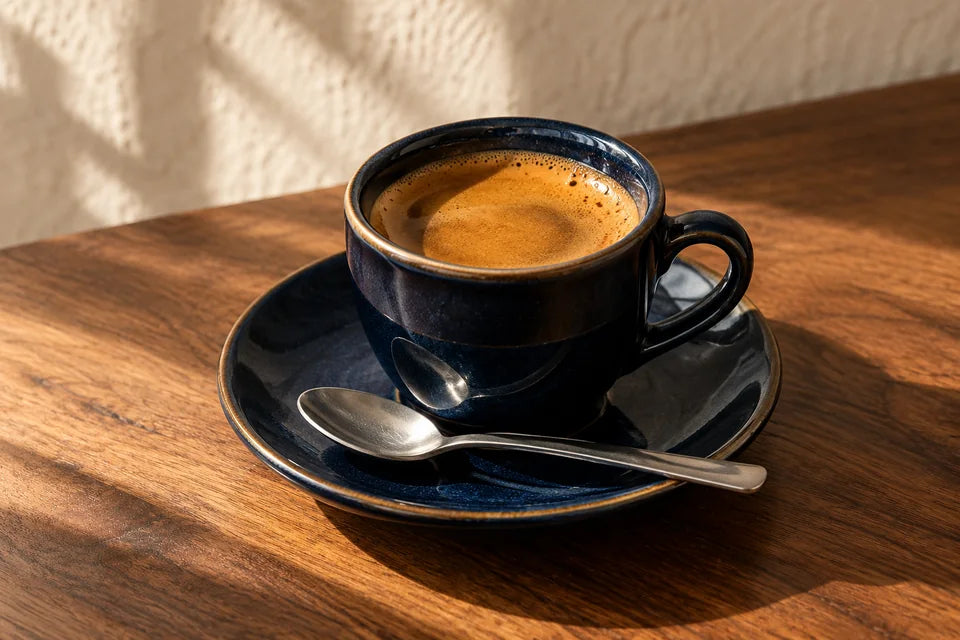
- 36 to 45 g prepared espresso, or 60 ml prepared moka coffee
- 150 ml cold milk or plant drink
- 120 g ice, plus more if needed to fill your glass comfortably
- Optional: 1 teaspoon sugar dissolved into the hot coffee, or 1 teaspoon liquid sweetener to start
Use a drinking glass of at least 350 ml, suitable for cold drinks, and a separate heat-safe cup for the coffee. Ice shape and glass size change how it all fits; leave room to stir without spilling. If your milk is already sweetened, taste before adding sweetener.
Build it in four simple moves
- Brew into the heat-safe cup. Follow your established coffee recipe and the equipment manual. Stir in any granulated sugar now, while it is easier to dissolve.
- Decide on cooling. For less ice melt, cool the small coffee portion in an open heat-safe vessel, using an ice-water bath if useful. Keep bath water out of the coffee. There is no fixed two-minute wait that guarantees cold coffee.
- Fill the drinking glass. Add the ice and cold milk. Pour the coffee slowly into the milk. If using hot coffee directly, use a vessel suited to that temperature change and expect extra melting.
- Stir and taste. The pretty layers are temporary; mixing gives you a representative first sip. Add sweetener or a splash of milk only if you want it.
If you want the glass ready almost immediately, start with properly refrigerated coffee or a prepared cold-brew serving. Follow the concentrate’s dilution directions first; concentrate and ready-to-drink coffee are different ingredients.
A useful next-glass comparison
| What you want | Try next time |
|---|---|
| More coffee presence | Keep the base steady and reduce milk from 150 ml to 120 ml. |
| A gentler cup | Add milk in 15 to 30 ml increments. |
| Less sweetness | Use unsweetened milk and omit added sweetener first. |
| Less early melting | Begin with colder coffee and milk; keep the glass and ice ready. |
Adding another espresso portion changes the caffeine as well as the flavor; less milk may be the more useful first adjustment. Decaf coffee is an option wherever your chosen brewing method supports it.
Prepare the parts, then make one drink
Keep cold coffee separate from milk until you build the glass. Use clean covered containers and follow the ingredients’ refrigeration directions. A glass with ice is not a substitute for refrigerated storage, especially once milk is added.
If you regularly make iced lattes, write down the actual coffee base, milk and sweetener you liked. “Same shot, 120 ml milk, no syrup” is much easier to repeat than “make it strong.” Our less-sweet iced latte focuses on choosing those additions; the concentrate guide helps you plan a make-ahead coffee base.
For a different cold drink, try espresso with sparkling water. For a sweetened milk variation, make a brown sugar shaken espresso.
Sources & further reading
Our teaching is written for Coffee Crate. Named recipes remain credited to their creators; manufacturer instructions apply to the equipment specified.
- FDA: Are You Storing Food Safely? (opens in a new tab) ↗General refrigeration and food handling. Does not establish a homemade coffee shelf life.
Sources checked 2026-10-16.