

Recipes
Sparkling Espresso Recipe
Sparkling Espresso for a Bright Afternoon
Coffee, cold sparkling water and ice make a lively glass. Leave some room for the foam and keep carbonation out of the shaker.
Jump to recipe
In this guide 5 chapters
Coffee with bubbles has its own character
Sparkling espresso is a simple way to try coffee outside the familiar milk drink. Carbonation changes the feel of the sip, so start with a small glass and see whether you enjoy the combination. There is no need to declare it the best summer coffee before tasting it.
Use plain unsweetened sparkling water for the first glass. Tonic water adds a different bitter and often sweet profile; flavored or sweetened sparkling drinks change the recipe too. A clean comparison begins with coffee, water and ice.
For one tall, gently fizzy glass
- 36 to 45 g prepared espresso, cooled; or 40 to 60 ml cooled moka coffee for a different strong-coffee version
- 120 ml well-chilled plain sparkling water
- 100 g ice
- Optional: 1 teaspoon liquid sweetener
- Optional: a small washed orange slice for garnish
Use a glass holding at least 350 ml so there is room for the initial foam. Prepare the coffee in a separate heat-safe cup. A small jug with a spout makes the final pour easier to control. These are Coffee Crate starting amounts, not the exact proportions of a named brand’s drink.
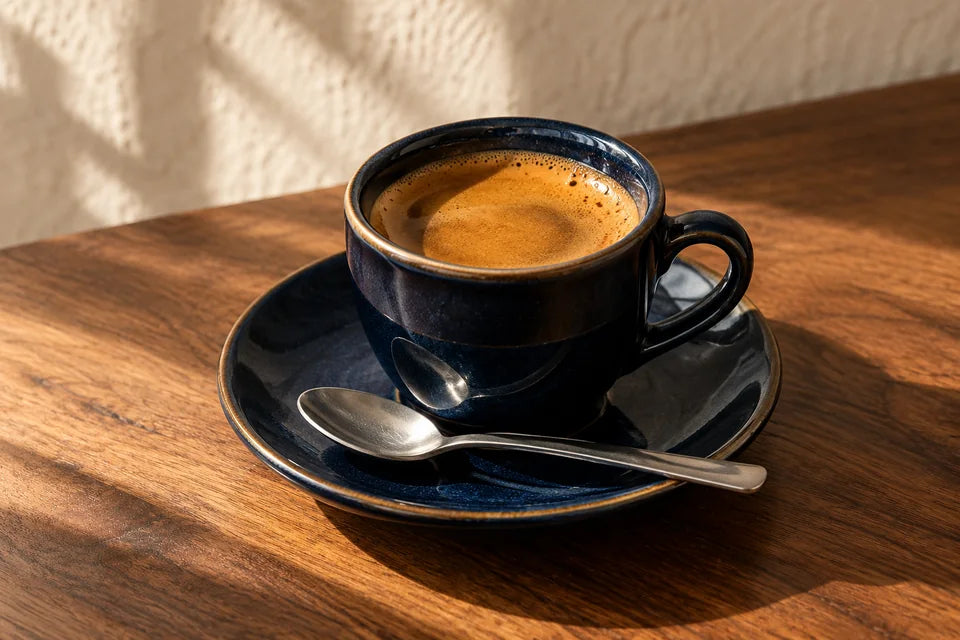
Cool the coffee, then pour slowly
- Prepare the coffee using your usual supported recipe. If you want granulated sugar instead of liquid sweetener, dissolve a small measured amount while the coffee is hot.
- Cool the coffee in its open heat-safe cup. An ice-water bath can speed this along without adding water to the coffee. Do not seal hot or warm coffee in a shaker.
- Add the ice and optional liquid sweetener to your drinking glass. Pour in the cold sparkling water, keeping room above it.
- Pour the cooled coffee slowly over the water and ice. Pause if the foam climbs toward the rim.
- Give it one gentle stir if needed, add the optional orange slice and taste.
Do not shake the finished sparkling drink or put it in a sealed protein shaker. Carbonation can build pressure. Avoid vigorous stirring if you want to keep more bubbles in the glass.
Let the first glass tell you what to change
If the coffee overwhelms the water, try 150 ml sparkling water next time with the same coffee amount. If it tastes too dilute, try 90 ml. More sparkling water changes both dilution and the character of the sip; it does not remove bitterness from the underlying coffee.
If you dislike the base before it goes into the glass, look at the brew first. The espresso guide covers supported espresso setup, and dialing in helps you make a deliberate adjustment. A naturally fruity coffee and a darker roast will taste different here; choose what you enjoy rather than assuming either is required.
If you want sweetness, add it a teaspoon at a time. Do not add honey directly to the cold bubbly glass and expect effortless mixing; blend it into the warm coffee first or use a prepared liquid sweetener.
A cold brew variation and a quiet alternative
For a cold-brew sparkler, begin with a small concentrate serving and choose the water amount by tasting. It is a different coffee base, so the espresso recipe’s proportions are a reference rather than a rule. The dilution guide helps with that choice.
Pour the sparkling water only when you are ready to drink. Scaling up into a large jug and leaving it out sacrifices the bubbles that make this drink appealing. For someone who prefers still coffee, offer the same cooled base with still water over ice, or the iced latte with cold milk. A good shared coffee break can include more than one kind of glass.
Sources & further reading
Our teaching is written for Coffee Crate. Named recipes remain credited to their creators; manufacturer instructions apply to the equipment specified.
- Nespresso Sparkling Coffee (opens in a new tab) ↗Primary recipe example of espresso with ice and sparkling water; our quantities and unsweetened option are independent.
- BlenderBottle: using a shaker safely (opens in a new tab) ↗Manufacturer warning against warm/hot liquids and carbonation in its sealed shakers; liquid-first mixing guidance.
Sources checked 2026-10-16.