

Brew Guides
Cold Brew Concentrate: Ratio, Steep Time, and How to Dilute It
Cold Brew Concentrate: Build a Glass You Love
Keep the batch recipe separate from the coffee you recover, then find a measured water or milk addition worth repeating.
Start reading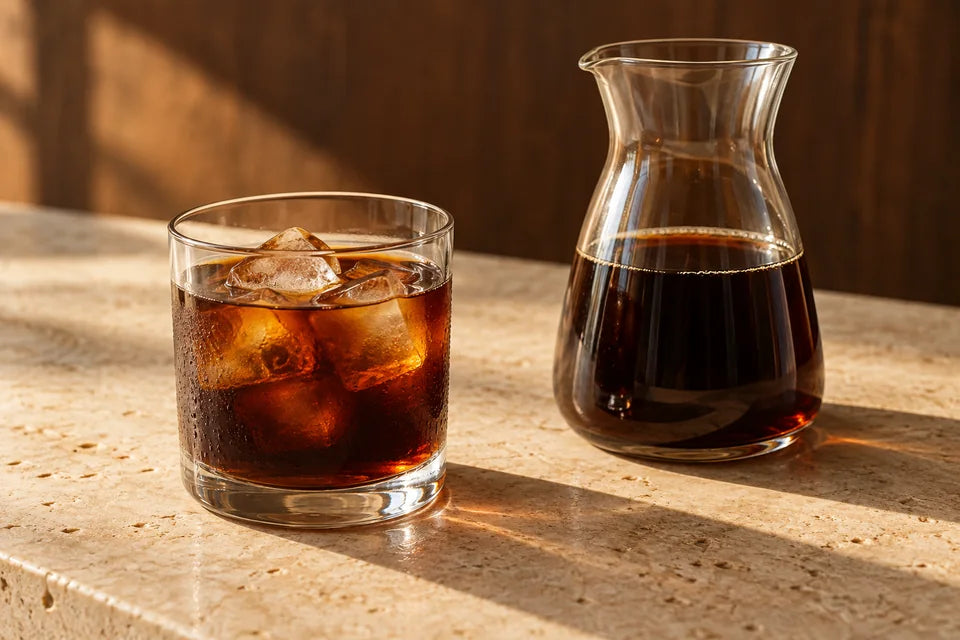 AI-created editorial imagery
In this guide 7 chapters
One jar, several good glasses
Your cold brew is filtered, the ice is ready and now comes the question: how much water goes in the glass? Start with a small serving, add a measured amount and taste. You can make it gentler without changing the whole batch.
Concentrate simply means coffee intended to be diluted before serving. The word alone does not tell you its measured strength, caffeine content or ideal water addition. A batch made with more coffee for the water can be a useful starting plan, but the glass still deserves its own recipe.
If you have not made the batch yet, use the beginner cold brew guide for the complete start, return and filtration workflow. This guide picks up the quantities that matter between the batch and your first sip.
- 01 · Batch inputs
- 100 g coffee+ 800 g brewing waterThis article’s 1:8 house planning reference
- 02 · Recovered coffee
- Measure itWeigh the liquid collected after filtration; do not assume 800 g
- 03 · A serving example
- 100 g concentrate+ 100 g water = 200 g mixtureBefore ice, milk or other additions
Use equipment with room for the batch and wet grounds, and follow its preparation, filtration and storage instructions. The house reference is not Toddy’s official recipe. A 1:1 serving addition does not establish an exact 1:16 brewing-input recipe.
Keep these three amounts separate
- Brewing inputs: dry ground coffee and water added to make the batch.
- Recovered coffee: liquid you actually collect after filtration.
- Serving additions: water, milk and ice that go into a glass.
Our article’s concentrate planning reference is 100 g coffee with 800 g brewing water, or 1:8 by mass. It is a house starting reference, not Toddy’s official recipe and not a universal concentrate standard. Use equipment that fits those inputs with room for the wet grounds and safe handling. Follow its wetting, filtration and storage instructions.
The recovered amount will be different from the water you added because liquid stays with the grounds and filter. Weigh what you collect; do not write down 800 g as the finished yield simply because the recipe used 800 g water.
Different concentrate recipes can use different amounts. Save the actual inputs with the batch so you can repeat the one you enjoyed. A serving calculator is most useful after you have measured the recovered coffee.
A small first-glass comparison
For a batch that has been prepared and stored under appropriate instructions, try a small water comparison before committing a tall glass. These quantities are serving plans, not measured results or guaranteed flavor targets.
| Serving plan | Recovered concentrate | Added water |
|---|---|---|
| A little dilution | 50 g | 25 g |
| Equal amounts | 50 g | 50 g |
| More dilution | 50 g | 75 g |
You can make just one of these, then add water gradually. Or compare two small glasses side by side. Stir each one and taste at a similar temperature. Look for an intensity and body you enjoy; none of the rows is the correct answer for every batch.
Once you find a favorite, scale the serving arithmetic. If 50 g concentrate with 50 g water works for you, 100 g with 100 g keeps the same concentrate-to-added-water relationship. Make sure the glass has space for any ice or milk you still plan to add.
What 1:1 dilution actually tells you
One part recovered concentrate plus one part water is a 1:1 serving addition. Equal masses make the arithmetic easy: 100 g concentrate plus 100 g water makes a 200 g mixture before ice or other additions.
That does not make a batch brewed at 1:8 an exactly known 1:16 brewing-input recipe. You have not recovered all the water you started with, and dry coffee mass is not the same thing as dissolved coffee in the liquid. To keep a useful home record, save the batch inputs, recovered amount and glass additions separately.
The serving ratio also does not calculate caffeine. Coffee, preparation and the recovered beverage matter. Avoid using concentrate as a synonym for a known caffeine dose, especially when making a larger drink.
Make room for milk and melting ice
Milk changes flavor and texture as well as liquid amount. If you enjoy milk with cold brew, build the drink the way you want to drink it. For a repeatable planning example, note “100 g concentrate, 50 g water, 50 g milk, then ice” rather than calling all 100 g of additions water.
Keep the milk product consistent during a comparison. A sweetened oat drink and plain dairy milk can produce different results even at the same mass. Their ingredients and flavor become part of the glass.
Ice contributes water as it melts. If a drink starts lovely and ends watery, try less initial water or a smaller serving so you can enjoy it before much melting. Keep the batch recipe steady for that comparison. If you weigh the ice, record that mass separately; it is not all liquid at the first sip.
Label the batch before you put it away
Record when water first met coffee, the actual brewing conditions and when filtration finished. If you forgot the start, mark it uncertain. Saving a batch now does not mean it started now. A timer can help organize the work; it cannot establish that a batch is safe to drink.
Use a clean food-safe container, label it and follow the documented preparation and storage instructions for the process you used. Toddy provides directions and storage claims for its own system; those claims are not a shelf-life guarantee for every home jar, filter or refrigerator.
Keep milk additions in the serving glass and follow the milk’s storage directions. Refrigerate foods that require it promptly and keep the refrigerator at or below 40°F (4°C), as FDA advises. That general rule does not validate a particular cold brew shelf life. If the batch’s handling is uncertain, do not taste it to check safety.
Make the next glass easier
Save a short serving note with the batch: what concentrate you used, water, milk, ice and what you liked. “Equal water, splash of milk” becomes much more repeatable when you have the measured amounts beside it.
If the glass still tastes unpleasant after a useful serving comparison, look back at the coffee and batch process before assuming it needs a longer steep. The tasting guide can help you describe the question. When you find a glass you love, you can keep the rest of the routine happily simple.
Sources & further reading
Our teaching is written for Coffee Crate. Named recipes remain credited to their creators; manufacturer instructions apply to the equipment specified.
- Toddy Home Cold Brew System manual (opens in a new tab) ↗Manufacturer instructions for the named system, with different paper-bag and felt-only wetting methods. Its recipe and storage claims do not validate arbitrary home-jar processes.
- FDA: Are You Storing Food Safely? (opens in a new tab) ↗General household refrigeration and perishable-food handling, including milk. Not a cold brew process validation or shelf-life study.
Sources checked 2026-10-16.