

Recipes
The Skinny Iced Latte: A Lighter Coffee-Shop Drink
A Less-Sweet Iced Latte, Made Your Way
If you found this through “skinny iced latte,” start here: choose your milk, taste the coffee and decide how much sweetness you actually want.
Jump to recipe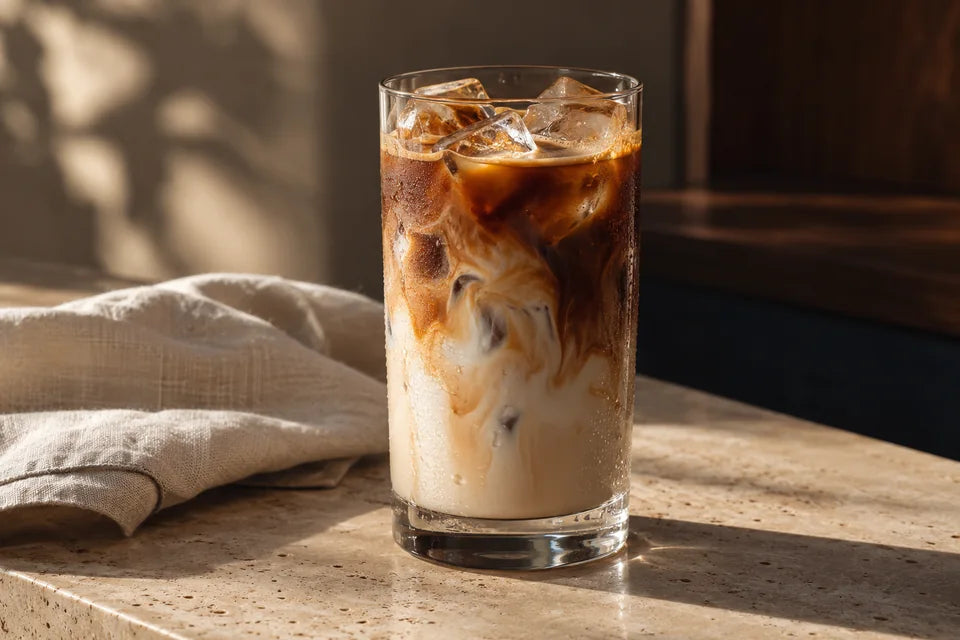 AI-created editorial imagery
In this guide 5 chapters
Begin with flavor, not a label
“Skinny” is a café term with different meanings from one menu to another. At home, a more useful question is simple: how sweet and creamy would you like this glass to be?
This recipe keeps the additions easy to see. Start with unsweetened milk if you like it, skip syrup for the first sip and add sweetness only if it improves the drink for you. A whole-milk latte is also a valid choice. Coffee does not need a good-food or bad-food label to be enjoyable.
One glass with a clear starting point
- 36 to 45 g prepared espresso, or 60 ml prepared moka coffee
- 150 ml cold milk or plant drink, unsweetened if that is your preference
- 120 g ice
- Optional: ½ teaspoon liquid sweetener, with more available if wanted
Use a glass holding at least 350 ml and a heat-safe cup for brewing. Choose milk by its taste, ingredients and the way it works for you. Almond, oat, soy and dairy products are not nutritionally interchangeable, and even two cartons in the same category can differ.
If a nutrition amount matters to you, use the actual labels and the amount poured. This page does not attach a single calorie count to every possible milk and sweetener combination. “Unsweetened,” “sugar-free” and “no added sugar” also describe different product features; read the package rather than assuming they mean the same thing.
Build, stir, then decide
- Prepare the coffee using a recipe supported by your brewer. Cool it in an open heat-safe vessel if you want less early ice melt.
- Put ice and milk in your drinking glass. Pour in the coffee and stir.
- Taste once it is at a comfortable temperature. Notice whether you want sweetness, more milk or simply a different coffee-to-milk balance.
- If you want sweetness, add the optional ½ teaspoon liquid sweetener and taste again. There is no requirement to leave it out.
If using a concentrated tabletop sweetener, follow that product’s serving directions instead of measuring it like syrup. Formats and strengths vary. For granulated sugar or thick honey, mixing into the warm coffee before chilling is easier than chasing crystals or sticky honey around the cold glass.
Choose creaminess deliberately
Keep the coffee and milk amounts steady when comparing cartons. A richer-tasting milk might suit you in a smaller quantity; a milder one may let more coffee flavor through. Those are useful sensory observations without turning one option into a universal winner.
For more coffee presence, try 120 ml milk next time. For a gentler glass, add another 30 ml. If the coffee base tastes harsh by itself, reducing milk may expose more of that harshness rather than fix it. The taste guide helps you work on the base.
Tasting notes on a coffee bag describe sensory impressions, not added sugar, chocolate ingredients or guaranteed sweetness. You do not need a special certification claim to choose a coffee that tastes good to you.
Keep the useful part of the experiment
Write down the milk product, amount and any sweetener you liked: “150 ml unsweetened soy, ½ teaspoon syrup,” for example. That tells you far more than a vague menu label. Keep perishable milk refrigerated according to its label and mix only the glass you plan to drink.
The classic iced latte has the same basic building blocks with more attention to cooling and dilution. If you are curious about protein powder, the proffee guide explains label-based mixing without making nutrition or breakfast promises. Enjoy the version that suits your morning; less sweet can be a preference, not a project.
Sources & further reading
Our teaching is written for Coffee Crate. Named recipes remain credited to their creators; manufacturer instructions apply to the equipment specified.
- FDA: Are You Storing Food Safely? (opens in a new tab) ↗General refrigeration and food handling. Does not establish a homemade coffee shelf life.
Sources checked 2026-10-16.