

Coffee 101
Meet Resurrection Espresso: Our Espresso Blend
Meet Resurrection Espresso: Start with a Good Shot
Meet our medium-roast Guatemala and Costa Rica blend, with a practical path into espresso, milk drinks and everyday brewing.
Start reading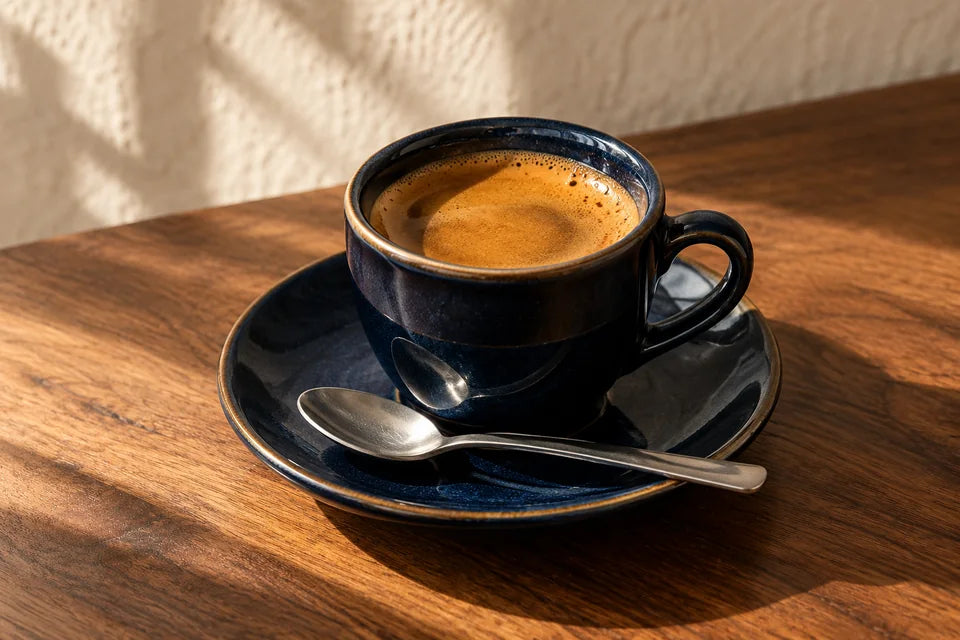 AI-created editorial imagery
In this guide 6 chapters
A coffee with more than one morning in mind
Resurrection Espresso is Coffee Crate’s medium-roast blend featuring coffees from Guatemala and Costa Rica. Its tasting description brings together milk chocolate, nutty sweetness and a rich, balanced finish. The catalog recommends it for espresso and lattes, as well as drip coffee and cold brew.
If you are beginning with espresso, those familiar flavor associations can be an inviting direction. If you already have a favorite routine, use the coffee in a way that fits your day. The name does not require you to own an espresso machine.
Know the coffee before the recipe
Resurrection Espresso is available in 12 oz and 5 lb bags; choose the format offered on the current product page. Use a grind suited to the brewer. Fine espresso adjustment and a compatible basket matter for a conventional espresso machine; a grind that works for drip is not automatically ready for it.
The catalog identifies the countries in the blend. It does not identify a specific farm, variety or processing method, so those details should remain open questions. Coffee Crate uses specialty-grade coffee, and clear information and useful teaching are part of helping you enjoy it.
Milk chocolate and nutty sweetness are tasting descriptions. For ingredient or allergen questions, use the actual product information rather than treating a flavor association as an ingredient list.
Build the shot around your basket
Start with the manufacturer’s safe dose range for the basket you actually have. Then choose a collected espresso target and measure both in grams. For example, an 18 g dose and 36 g collected beverage illustrate a 1:2 ratio only when that dose suits the basket. The example does not establish a universal Resurrection Espresso recipe.
That beverage target is the coffee collected in the cup, not water to pour into the reservoir. Shot time is another observation; a particular number of seconds cannot certify the taste. The espresso guide walks through setup, preparation and a measured first shot.
If you do not know the basket type, check it before borrowing advice meant for a different setup. Follow the machine’s manual for operation, pressure release and cleaning.
Give the first shot a useful note
Stir the shot, let it become comfortable to taste and notice aroma, texture and the finish. Record actual dose, beverage mass, time if observed and the result. “Sharp and thin” is a different starting point from “rich, with a drying finish.”
Keep a suitable dose and preparation steady while choosing one adjustment. Increasing collected espresso can change concentration and extraction together; it is not simply a way to make the same drink larger. Our dialing-in guide helps you make that choice deliberately.
You do not need to chase a tasting note at the expense of an enjoyable drink. A recipe worth repeating is the one you can prepare safely and like drinking.
Make the milk drink you actually enjoy
Prepare the espresso first, then add a measured amount of milk so you can repeat the balance you like. If the coffee feels lost in a large cup, compare a smaller milk portion before changing several espresso settings at once.
For steaming, use the guidance for your actual machine, pitcher and milk. The milk-texture guide helps with a practical routine. Technique advice is separate from milk handling; follow the product’s storage and handling directions.
A different brewer is welcome too
For drip coffee, use a compatible grind and a complete machine recipe. For cold brew, plan the refrigerated batch and the additions to the serving separately. Those methods have their own amounts and timing, so the espresso example should stay with espresso.
Close the bag carefully and keep a note of a brew you love. You can explore Resurrection Espresso here. Whether the day begins with a small shot or a mug shared across the table, a useful routine makes room to enjoy it.
Sources & further reading
Our teaching is written for Coffee Crate. Named recipes remain credited to their creators; manufacturer instructions apply to the equipment specified.
- Coffee Crate: Resurrection Espresso (opens in a new tab) ↗Current merchant catalog read October 16, 2026 supplies roast, Guatemala/Costa Rica, tasting description, bag sizes; format follows the current product options; no inferred farm, species, process or dispatch promise.
- La Marzocco: Basic Espresso Theory (opens in a new tab) ↗Manufacturer education explains dose and collected espresso; actual basket guidance governs the dose and example ratios are not universal targets.
- Barista Hustle: Understanding Yield (opens in a new tab) ↗Educator framework for beverage yield and strength/extraction tradeoffs; no product-specific shot validation.
Sources checked 2026-10-16.